Home > Blogs > Humanis AI Content - A Student-Friendly Guide
March 14, 2026
Share Article
By
March 14, 2026
Share Article
Recently Updated on March 14, 2026
Humanis AI Content - A Student-Friendly Guide
Home > Blogs > Humanis AI Content - A Student-Friendly Guide
March 14, 2026
Share Article
By
March 14, 2026
Share Article
Recently Updated on March 14, 2026
Humanis AI Content - A Student-Friendly Guide
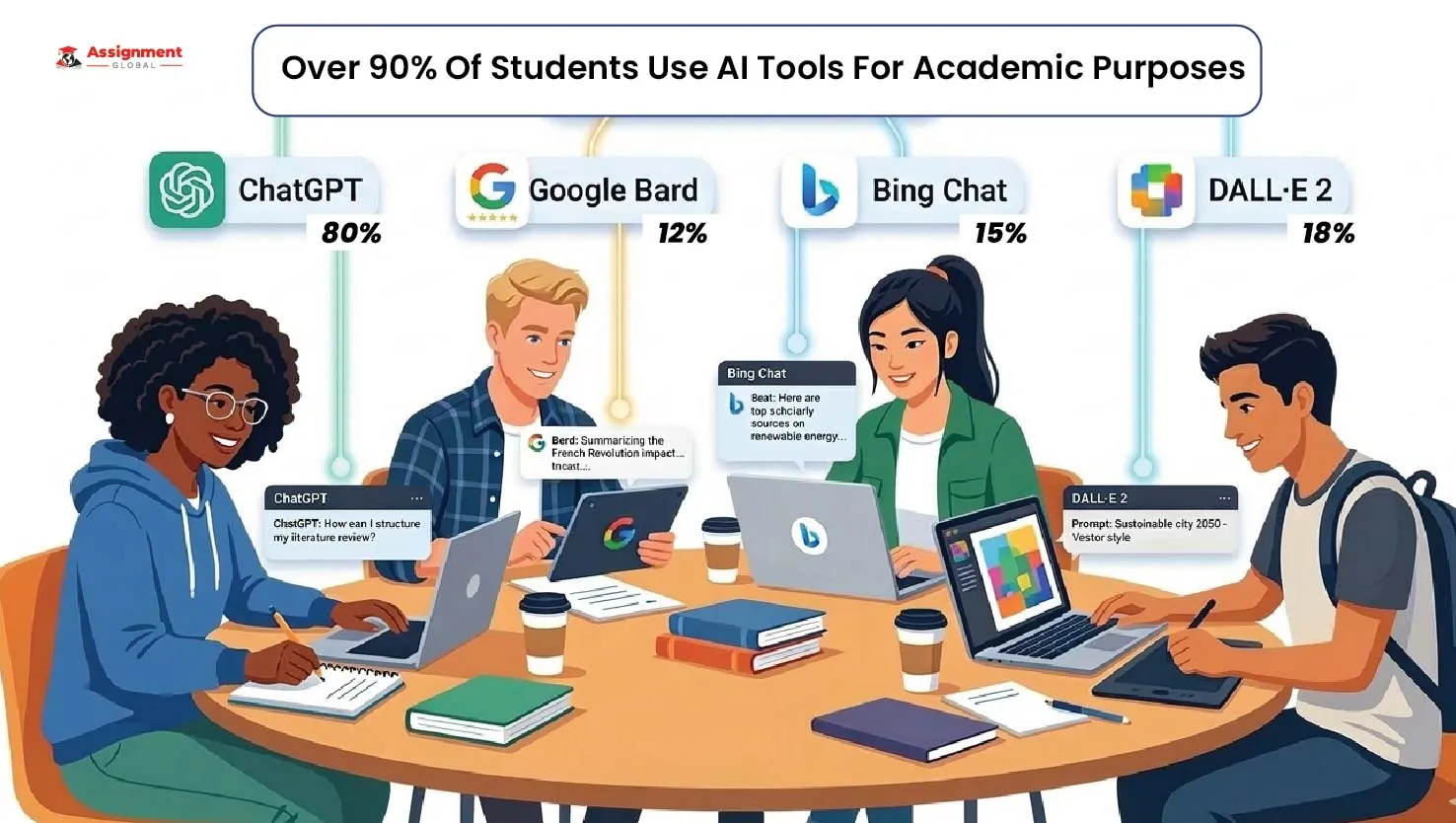
AI tools are now widely used in academics, from brainstorming ideas to drafting full answers. However, raw machine-written text sounds plain, repetitive, and unnatural, which results in low marks. This is why learning how to humanise AI content is necessary if you want to take an AI tool’s help for your assignments, coursework, and future projects to make it authentic and engaging.
In this blog, we are going to discover why human-written content matters, common issues with AI-generated text, and how to humanise AI-generated content. With these practical methods, you can write with clarity, flow, and a professional tone. Further, you can make sure that your written assignment can impress the professor.
Why is Human-Like Writing Important In Academics?
When you are writing an assignment, your aim is not just to fill up the pages but also to communicate your ideas clearly and convincingly. If your writing feels robotic, then it can break the connection between your professor and you. Your professors look for reasoning, clarity, and logical flow of ideas that AI content optimisation writing often struggles with.
Humanise writing allows you to explain concepts in a relatable way, maintain consistency in arguments, and show critical thinking. It also enhances readability, making your work easier to follow and more persuasive. This is why focusing on human-like AI writing is not about hiding the AI usage but about enhancing the overall quality.
Common Issues Found In AI-Generated Content
Before you learn to improve AI-written text, you actually need to know the issues of AI-generated content. Most of the AI tools are based on a common pattern that results in predictable issues in academic writing.
Repetitive Sentence Structure: AI often repeats similar sentence patterns throughout paragraphs. This makes the content sound monotonous and reduces engagement. You might notice repeated openings like “Moreover”, “In addition to”, and "Furthermore" used too frequently.
Generic Explanations: Another issue in AI content optimisation is generic explanations. AI tends to stay safe, resulting in vague statements without any depth or real-world relevance. In academic work, this can weaken your arguments.
Lack of Personal Tone: AI-generated text usually avoids addressing the reader directly. This creates distance and makes the content feel impersonal. Especially in cases like reflective assignments, where engagement is crucial.
Understanding these issues makes it easier for you to apply the AI techniques that transform basic drafts into refined academic pieces.
How To Humanise AI-Generated Content?
Enhancing AI-written text does not mean that you have to rewrite everything from scratch. Rather than that, you can refine and reshape it so it reflects your voice and academic intent. Here is how you can do it effectively:
Adjust The Tone According To The Audience: Your assignments should sound like they are written by you, not humanise AI content. Read the content aloud and notice where it feels stiff or unnatural. Replace overly formal or robotic phrases with simple, clearer language while maintaining academic standards.
Add Logical Flow Between Ideas: AI often presents points without any smooth transition. You can enhance the flow by adding linking sentences that describe how one idea connects to the next. This makes arguments easier to follow and strengthens coherence.
Involve Context or Examples: Adding brief explanations or examples helps ground abstract ideas. This is one of the most effective ways to enhance AI-generated content, as it adds depth and originality.
Break Down Long Paragraphs: Large chunks of paragraphs can be overwhelming and boring. Splitting it into smaller sections can enhance readability and make your content visually appealing.
Best Practices For Humanising AI Content
Humanising AI content becomes easier with consistent editing habits. These small techniques can make a big difference in how natural your writing feels.
Replace Predictable Words: AI tools often rely on the same vocabulary. Change the repeated words with appropriate synonyms to enhance the variety and clarity. This keeps the audience engaged through your writing.
Ask Questions Within The Text: Want one of our tips to make AI writing sound natural? Occasionally, address the audience with an interesting question that creates interaction. It makes the content feel conversational without losing credibility.
Change Sentence Length: Mixing short and long sentences addresses rhythm in your writing. This simple trick is one of the best practices for humanising AI content. With this, you can avoid common plain lines and make your content sound natural.
Structuring Human-Like AI Writing For Better Engagement
Structure plays a crucial role in how your content is perceived. Even a well-written text can feel dull if it is poorly organised.
Use Clear Headings and Subheadings: Headings guide the audience and make your content easy to read. They also help you stay focused on one idea at a time, reducing any unnecessary repetition.
Stick to One Idea For Each Paragraph: Each paragraph needs to address a single point. This can enhance clarity and ensure your arguments are easy to follow.
Maintain Consistent Formatting: To humanise AI content optimisation, you need to use consistent formatting. For example, keep the same spacing and heading style throughout the paper. This strategy can improve the readability and presentation of your work.
Ethical Use Of AI In Academic Writing
Using AI responsibly is just as important as improving its outcome. You should always treat AI as a support tool and not as a replacement for your thinking. Make sure that you understand the requirements of the assignment. To achieve the correct assignment solutions, you need to review the facts, check references, and ensure that the arguments align with the requirements.
You can not use AI blindly without even looking at your research topic. Otherwise, you would be losing the opportunity to learn from it, while you may also receive failing grades for not meeting the assignment expectations. When you balance AI assistance with your own efforts, you naturally humanise AI content while maintaining ethical standards.
In modern education, many universities have accepted the use of AI to brainstorm ideas, research efficiently, and keep up with technology. Yet at the same time, universities value the creative side that all of you can bring. Hence, when you maintain human-like AI writing, you do not just get to use AI but also showcase your creativity. Afterall, technologies are made to ease your difficulties and not to replace your real talent.
Tips To Make AI Writing Sound Natural
AI can definitely write, but can it write like you? Use these tips to make AI writing sound like yours:
Add personal touches and human emotions for storytelling.
Replace passive voice with active voice to add a personal tone.
Change your sentence to start with something short and punchy.
Cut off the fillers that make your writing boring or heavy.
Edit for better flow and readability.
Use any humanise AI content tool.
Remove overused or generic phrases.
Avoid the use of complicated words or phrases that create confusion.
These tips not just let you improve your content but make you own it.
Get 20% OffYour Good Grades Are Just A Click Away!
Mastering how to humanise AI content allows you to transform your basic drafts into an engineered, high-quality academic work. By refining the tone, enhancing the structure, and adding a personal touch, you can make sure your writing sounds natural and credible.
If you need expert assistance to make your academic paper engaging and humanised, then opt for Assignment Global. You can select any online assignment expert that you want to do your work. We provide you with free plagiarism and an AI report to submit your work with confidence.
DELIVERED ORDERS
EXPERTS
CLIENT RATING
FAQs
How To Humanise AI-Generated Content For Academic Use?
You can enhance AI-written drafts by adjusting the tone, including personal explanations, improving transaction, and making sure that the ideas reflect your understanding rather than generic statements.
Can AI Tools Replace Manual Writing For Assignments?
No. AI can support drafting and Idea generation; however, your involvement is necessary to ensure originality, accuracy, and alignment with academic requirements.
What Are Some Tips To Make AI Writing Sound Natural?
Simple tips like changing sentence length, replacing repetitive words, and directly addressing the reader can make AI-assisted writing feel smoother and more engaging.
How Do I Ensure My Content Meets University Standards?
Always check the formatting guidelines, verify the sources, and revise the content to match the expected academic tone before submission.
What Are The Best Practices For Humanizing AI Content In Assignments?
Reviewing structure, adding examples, maintaining logical flow, and proofreading carefully are effective ways to enhance ability and academic predictability.