Home > Blogs > A Complete Legal Case Study Guide for Law Students
June 12, 2026
Share Article
By
June 12, 2026
Share Article
Recently Updated on June 12, 2026
A Complete Legal Case Study Guide for Law Students
Home > Blogs > A Complete Legal Case Study Guide for Law Students
June 12, 2026
Share Article
By
June 12, 2026
Share Article
Recently Updated on June 12, 2026
A Complete Legal Case Study Guide for Law Students
Every case tells a story, and with a legal case study, you unpack the legal issue with precision and logic. Whether it's an exam or a coursework task, or you are building legal analytical skills, a well-written case study sets you apart by demonstrating your analytical skills and legal reasoning abilities. Moreover, your ability to dissect complex legal scenarios and apply legal principles determines your legal academic progress.
But most law students struggle with writing a proper law case study by failing to structure their analysis clearly. Here, this Legal case study guide for law students can be your practical roadmap. In this blog, you get to know in detail how a legal case study must be approached and written, with examples, format guidance and quick tips. Keep reading.
The Law Student Case Study Format That You Must Know
A law case study is a detailed legal analysis that assists law students in understanding the real application of laws in real situations. It focuses on the facts, arguments, issues, judgments, and the application of legal principles. Although it may seem simple, many students do not know How to write a legal case study. Its basic law student case study format consists of parts, like:
Title
Executive Summary
Introduction
Case Facts
Legal Issues
Arguments
Judgements
Law Application
Critical Analysis
Conclusion
References
This structure helps you move from basic case summary to legal reasoning. A strong format also makes your work easier for professors to follow because each section has a clear academic purpose.
A Simple Guide To Writing A Legal Case Study: See Steps
Attempting your first legal case study analysis? Know how to write a legal case study here, as these are tested and tried methods. From how to approach a case to understanding the law student case study format, you get a comprehensive guide to writing a legal case study here:
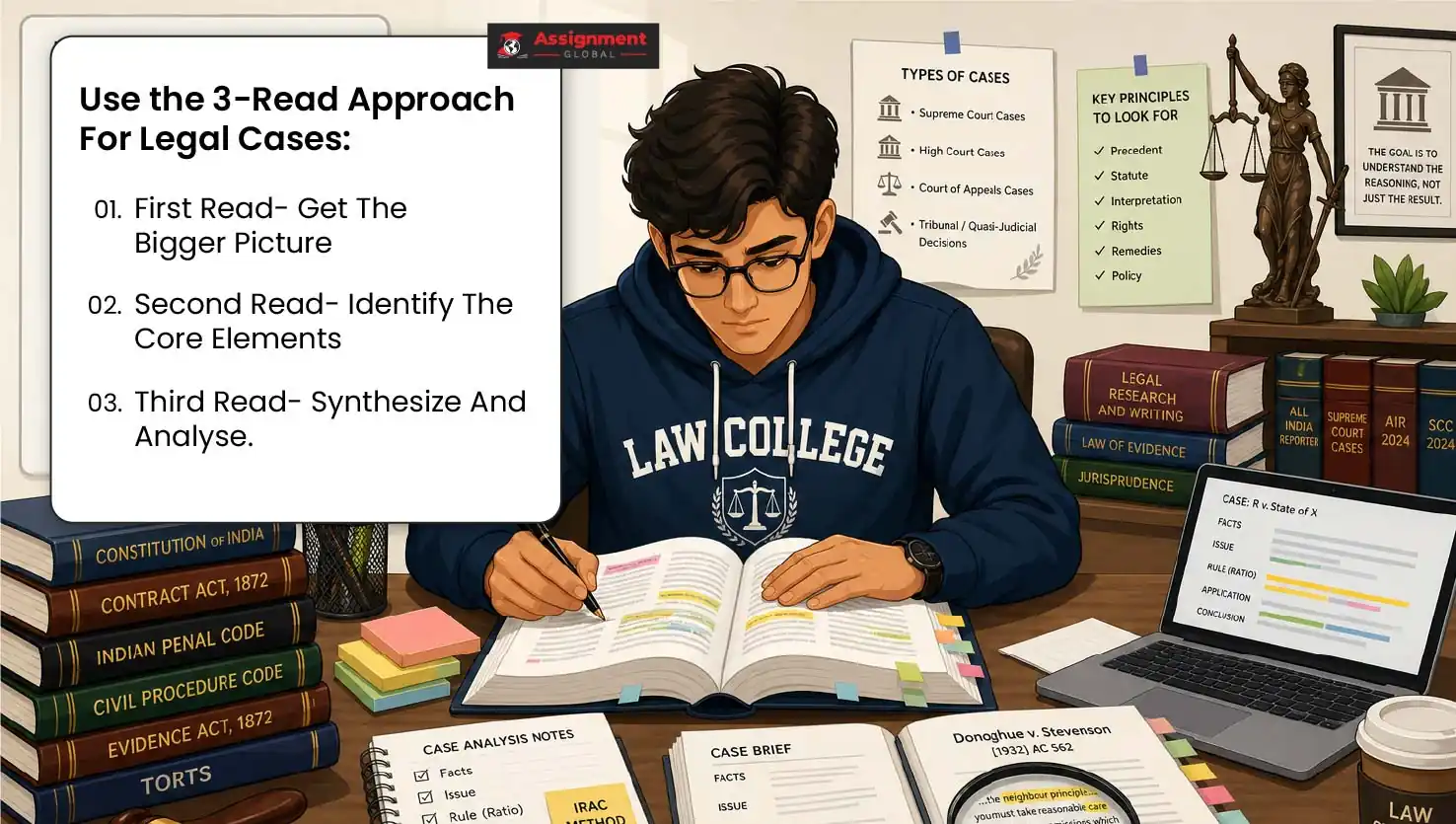
Reading The Case Carefully: For those who want to know how to write a case study in law, reading the case multiple times is the cornerstone of a great start. In the first reading, you get a general understanding of the legal facts and information; in the second reading, you focus on the legal issues, the court judgments, and reasoning. The third reading is about identifying the rules of law and the judicial logic in the judgments.
A case study analysis in law requires you to note the facts of the case, arguments of both sides, and the ratio decidendi or the reasoning, which is possible with careful reading. You should also highlight the procedural history, legal question, final decision and any dissenting opinion if it is relevant to your assignment.
Identify Key Elements: A strong case study analysis in law is possible when you also identify the key elements of a legal case, such as what happened, which parties are involved, and the background events. You must know the main legal question in this context, the plaintiff or claimant, and the defendant.
A legal case study guide for law students always prioritizes this critical information, covering the arguments of both sides, who won the case, and why the court came to such a decision. You should also note the final order, such as dismissal, compensation, injunction, conviction, acquittal or another remedy depending on the case type.
Go By The IRAC Method: Using the IRAC method is considered a practical guide to writing a legal case study on any law specialization. It is considered to be one of the most effective ways to structure a case study analysis in law. IRAC is more than just an acronym, standing for Issue, Rule, Application, and Conclusion.
This is a time-tested structure in which the issue identifies the main legal question in the current case, the Rule states the legal principle, and the statutes are listed. Next, it has the application where you demonstrate your legal thinking and explain how the law fits the facts. The conclusion states the outcome.
For example, if the issue is whether a valid contract existed, the rule may involve offer, acceptance, consideration and intention to create legal relations. The application then explains how those rules apply to the facts of the case.
Examine Court’s Reasoning: One of the most important steps when studying a legal case study guide for law students is to explain why the court reached the particular decision. This is key as it allows your paper to go beyond the legal summary and show real legal understanding.
It is important that you understand why the court used the particular law, statutes, and whether the judgment applied any established legal doctrine. Look for how the particular judgment connects the law to the facts, or whether the court considered any social, economic, or ethical factors. Also check whether public interest, policy concerns, precedent or statutory interpretation influenced the outcome.
Use Proper Legal Structure: The paper needs to be arranged as per the standard legal structure so that it meets the professional criteria. A law student case study format has a title page where you mention the case name, court, year, and citations.
The next sections offer a basic overview of the case in the introduction, followed by background information and key events that led to the dispute. You then state the legal issues, the relevant legal principles, and the final decision of the court, supported by proper critical analysis.
Evaluate Case Critically: Critical analysis is what takes your legal case study from good to exceptional. This is where you are assessed the most as it reflects your independent legal thinking and judgement. You do not just explain the case but analyze, question, and judge the court's decision with appropriate legal reasoning.
Ask yourself questions like- Did the court interpret the particular law correctly? Were relevant past legal case study examples used correctly? While critically analyzing, consider fairness and justice, without sounding biased.
You can also compare the judgment with later cases, academic commentary or statutory changes. This shows that you understand the case as part of a wider legal system, not just as an isolated decision.
What Legal Case Study Examples Look Like
To get more clarity on the case study writing style, you can check various legal case study examples. One such example is:
Carbolic Smoke Ball Company Vs Carlill ( 1893)
Facts: The company claimed that its product can prevent influenza. However, many who used it got sick. Mrs Carlil was one such victim.
Issue: Whether the advertisement could be treated as a legally binding offer.
Rule: Under English contract law, an advertisement can become a unilateral offer if it shows a clear intention to be bound and the conditions are accepted by performance.
Application: The company deposited money in the bank and demonstrated the intention to create a contract. Mrs Carlill fulfilled the conditions by using the product as directed.
Conclusion: The court gave orders in favour of Mrs Carlil.
This example shows why legal case study examples must be accurate, jurisdiction-aware and supported by the correct legal rule. Even a small factual or jurisdictional mistake can weaken your analysis.
How To Write A Legal Case Study: Quick Winning Tips
Some additional tips on how to write a legal case study are:
Do not skim through the case files; instead, read them like a lawyer by focusing on facts, court reasoning, and legal issues.
Strengthen your legal case study with case law precedents, important regional legal principles, and statutes, as it shows your understanding.
Do not use legal terminology unless you are completely sure of its meaning. Avoid casual phrases, as legal analysis is about using the correct legal terms.
End with a strong conclusion by summarizing the key issue, your personal evaluation, and the court decision. Avoid any kind of personal bias.
Also keep your language formal, concise and evidence-based. Professors usually prefer clear legal reasoning over dramatic wording or unsupported opinions.
Common Mistakes To Avoid
A Legal case study guide for law students is incomplete without warning you about common mistakes. Many students summarize the entire judgment but forget the analysis. Others write emotional opinions without legal reasoning. Some fail to cite authorities, confuse facts with issues, or use the wrong jurisdiction.
Avoid these mistakes by following a clear guide to writing a legal case study and checking your university rubric before submission. You should also proofread citations, verify case names, and make sure every argument links back to the legal issue.
Get 20% OffYour Good Grades Are Just A Click Away!
By now you know that to write a strong legal case study, you do not only just explain the judgments but reveal the logic behind them. This case study is where the legal reasoning meets the facts and allows law students to go beyond the legal theories and the textbooks.
However, writing a well-rounded law case study is not an easy thing, as many students stumble despite good legal knowledge. But with the above legal case study guide for law students, you can now get a clear direction for writing quality law case studies and get law exam help too.
However, if you still need help, ask our law experts at Assignment Global to “ Do my assignment” and get sorted with legal analysis.
DELIVERED ORDERS
EXPERTS
CLIENT RATING
FAQs
How To Identify the Most Crucial Facts In A Case?
You must focus on facts that directly influenced the court's decision and ignore all the background details that do not affect the legal issue.
How To Strengthen A Case Study Analysis In Law?
To strengthen the legal case study analysis, first read the case files properly, examine the key elements, the court's judgments, and critically evaluate the context. A strong case study analysis in law also connects facts, rules, reasoning and conclusion in a logical sequence.
Can I Use My Personal Opinion in Case Analysis?
You can use personal opinion in analysis and evaluation, but it must be supported by legal precedents and reasoning. You must avoid personal bias.
What Are The Common Mistakes Students Make In Legal Case Studies?
Common mistakes are ignoring case facts, misinterpreting legal principles, not reading the files, writing unsupported arguments, using the wrong case law, missing citations and failing to follow the required format.
Is the Legal Case Study Guide for Law Students Useful?
Yes. For beginners who are new to this format, this guide gives much-needed direction on structure, the approach, and the writing standards. It also helps students understand how legal reasoning, case facts and critical evaluation work together.