Home > Blogs > Academic Challenges Due to AI Writing Detector
April 3, 2026
Share Article
By
April 3, 2026
Share Article
Recently Updated on April 3, 2026
Academic Challenges Due to AI Writing Detector
Home > Blogs > Academic Challenges Due to AI Writing Detector
April 3, 2026
Share Article
By
April 3, 2026
Share Article
Recently Updated on April 3, 2026
Academic Challenges Due to AI Writing Detector
The rise of AI writing detectors has sparked intense debate on campuses worldwide. As AI tools like ChatGPT have become common for drafting essays and research. Universities are turning to detection systems to preserve academic standards and identify AI-generated writing in submissions.
In today's blog, we are going to look at how AI detection tools work, where they fall short, why universities are updating their integrity policies, and what it all means for you. You are going to find out a way to adapt to the changing landscape of digital writing by the end of the day.
The Rise of AI Writing Detectors In Academics
AI writing platforms have changed the way you approach your essays, research papers, and reports. They can allow you to brainstorm ideas, refine grammar, or even rewrite entire paragraphs within the blink of an eye. However, as these tools have become common in use, educators have shown concern about unfair advantages and the erosion of genuine scholarship. This is where the AI writing detector enters the academic field.
Universities initially trusted the existing plagiarism systems. However, traditional checking methods compare your work to published texts; they cannot spot new sentences crafted by an AI model. This action has pushed educational institutions to adopt AI-generated content detection tools that are designed to analyse patterns and stylistic signatures often related to machine-generated text.
What AI Detection Tools Actually Do
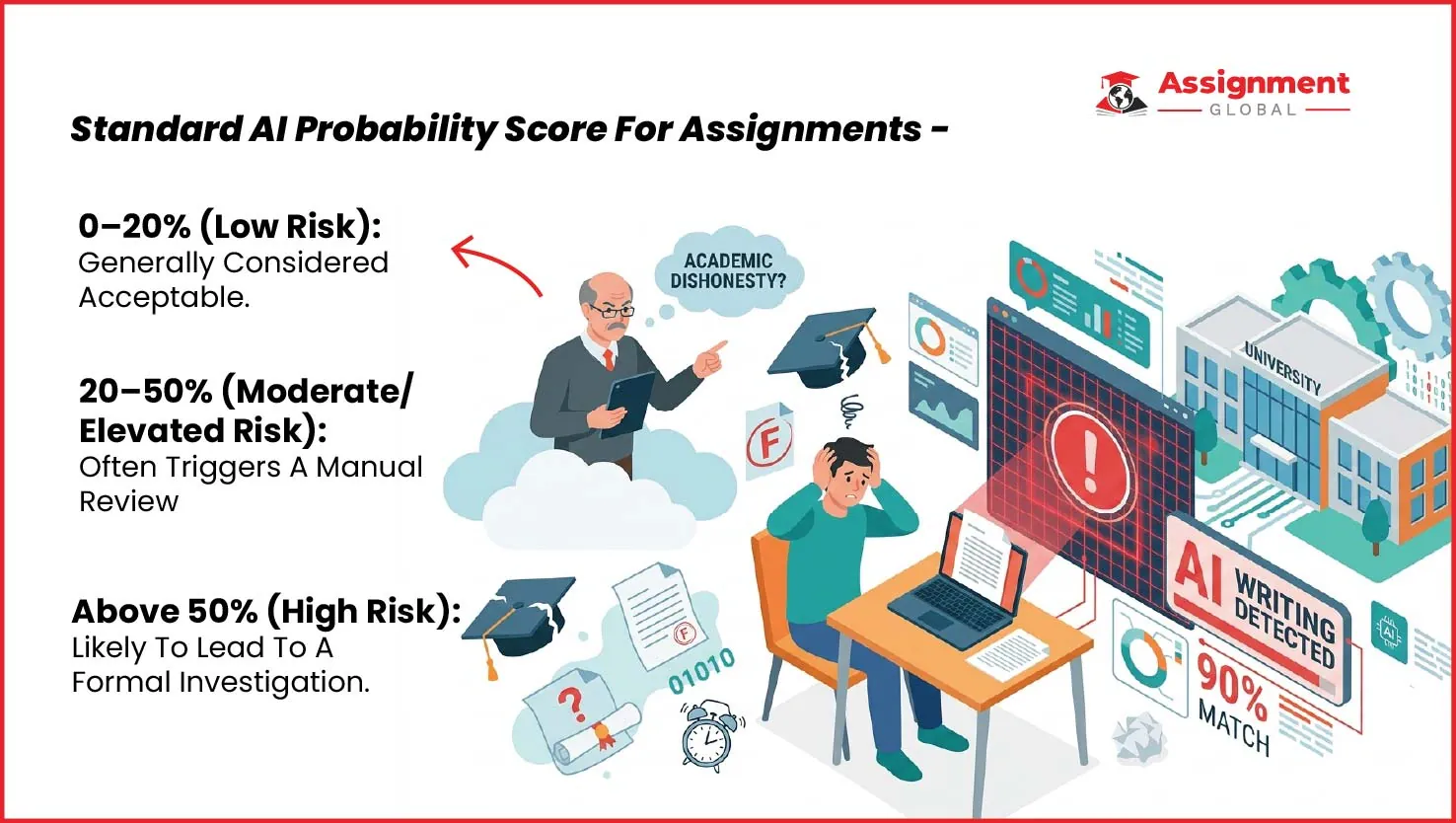
Primarily, detection tools for AI scans write submissions and evaluate the chances that an AI model has generated the content or not. These tools look for statistical patterns that differ from typical human writing. While AI content detectors can offer indicators, they do not deliver absolute proof. Their outputs are probabilistic and not definitive.
Some of the tools claim high accuracy or use advanced machine learning to boost detection rates, but empirical research still shows limitations. Especially when AI-produced texts are lightly edited or merged with human phrasing.
Strengths And Limitations of the AI Content Detector
While AI detectors are great at detecting text in your assignments, they come with both pros and cons.
Strengths
Detecting Major Parts: Detection tools are developed to scan your writing and identify certain patterns and features that indicate AI-generated content. Tools can quickly identify any spam or other types of content that look machine-like. Yet the results are not always correct.
Easy Process: Compared to manual checking, AI-generated content detection is easier with digital tools. They track down text in blocks. There are many tools like Turnitin, Grammarly, and Copyleaks that easily detect AI writing with just a click.
Time-Saving and Cost-Effective: Most detection tools are free or offer a student package that lets you access them without breaking the bank. Within minutes, you can scan the writing that lets you save time for editing and refining.
Weakness
Not Always Accurate: Even though AI detection tools are helpful, they might not always give you an accurate result. There are times it can not detect AI phrases or even detect your own handwritten content as AI.
Insufficient Training Data: Since these detection tools mostly require good training data in order to work well, detection may not always work. This means that it can not differentiate between human-written data and AI-generated content if the training data does not have variety.
Limited Capabilities: AI content detector tools can detect text or traits that they have been particularly trained to recognize. This means that using novel methods or features in content can not be recognized by the tools.
Shaping Academic Policies Around AI
Universities are not just buying detection tools; they are updating their policies as well. Clear AI policies in universities are necessary, as technology alone can not define ethical boundaries. Some educational institutions have accepted the use of AI for limited purposes. For example, you can use AI to brainstorm ideas, but full-text generation is banned as it clearly replaces individual thinking.
This shift of AI policies in universities recognises not just whether you are using AI but also how you are using AI. With such an approach, universities, educators, and students can preserve academic integrity without stifling innovation or learning support.
Educational Strategies Beyond Detection
Simply relying on technological scans for AI-generated content detection is not enough. Many educators are redesigning assessments to keep focus on skills that are harder to outsource to AI. According to AI detectors and academic integrity guidelines, it includes oral presentations, interactive drafts, and in-class reflections. These require showing your thought process and can not be fully outsourced to a machine.
Some universities have even paused or phased out the fierce use of AI writing detectors after witnessing false accusations and unfair penalties. This highlights the need for human judgment in academic integrity reviews.
What AI Detectors And Academic Integrity Mean to You
As a learner yourself, understanding the academic integrity and detection tools is important for you as:
Using detection tools has become a necessary academic rule for most of the universities.
Your educator would combine the detection scores along with manual cross-checking and contextual discussion.
Do not just use the AI tools by commanding - do my assignment, clarify how you can integrate them with your own knowledge and skills.
Engage with the policies your university publishes about AI use. They are evolving fast, and knowing the rules lets you stay aligned with expectations.
Get 20% OffYour Good Grades Are Just A Click Away!
The rise of AI writing detectors marks a transformative moment in education. One that forces a rethinking of how to approach writing, creativity, and learning. While the detection system offers valuable insights, it is not infallible and must be paired with clear policies throughout assessment design and human discretion. As detection and AI tools mature, so will be the ways you and educators adapt to uphold academic integrity without sacrificing innovation.
If you want assistance in your writing to make it AI-free, then opt for us. Assignment Global is a professional help service that provides you with a suitable online assignment writer as per your choice. They craft your paper from scratch to make it original and handwritten. We provide free plagiarism and AI reports, along with maintaining all the academic policies of universities.
DELIVERED ORDERS
EXPERTS
CLIENT RATING
FAQs
How Does An AI Writing Detector Affect The Way I Submit Assignments?
It can flag parts of your assignment that appear machine-generated, which means your university may review your submission more closely. Understanding how these tools work lets you avoid unintentional issues and submit assignments with confidence.
Can I Appeal If My Work Is Incorrectly Flagged As AI-Generated?
Yes, many universities allow you to explain your writing process, submit drafts, or provide evidence of your assignment. Knowing your rights and keeping drafts can help you to protect yourself in such situations.
Why Are AI Policies In Universities Changing So Quickly?
AI-related policies in universities are evolving because generative tools are advancing faster than traditional academic rules. Universities are trying to balance innovation with fairness, clarity, and responsible learning practices for you.
How Can I Use AI Tools Responsibly Without Risking Penalties?
You can use AI for brainstorming, structuring ideas, or improving clarity as long as the final work reflects your own understanding and follows your institution's guidelines.
What Role Do AI Detectors And Academic Integrity Play In Assessments?
These two are closely linked as detection tools are used to support fair evaluation. However, most universities rely on human judgment alongside technology to ensure decisions are not made on software results alone.